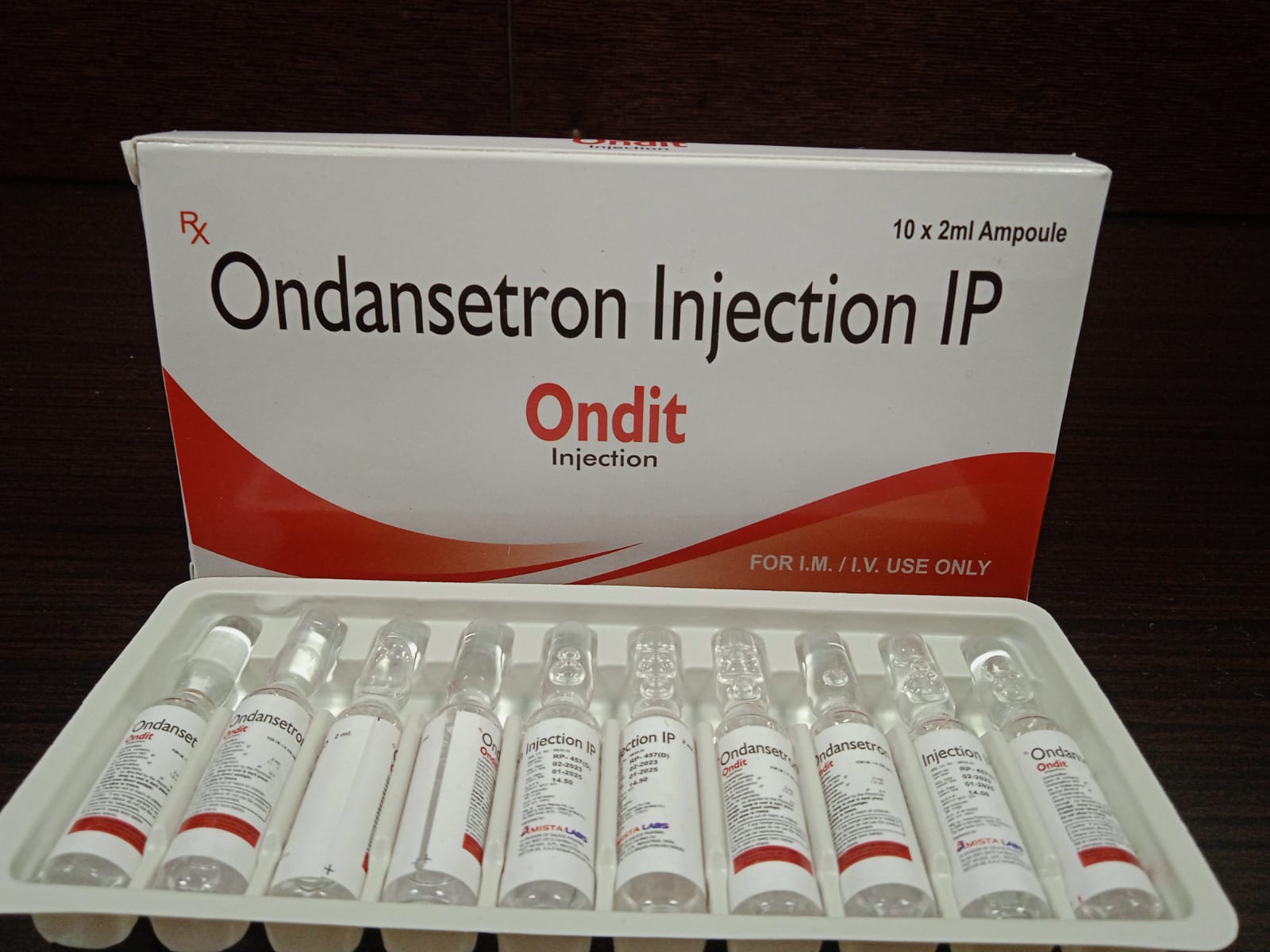
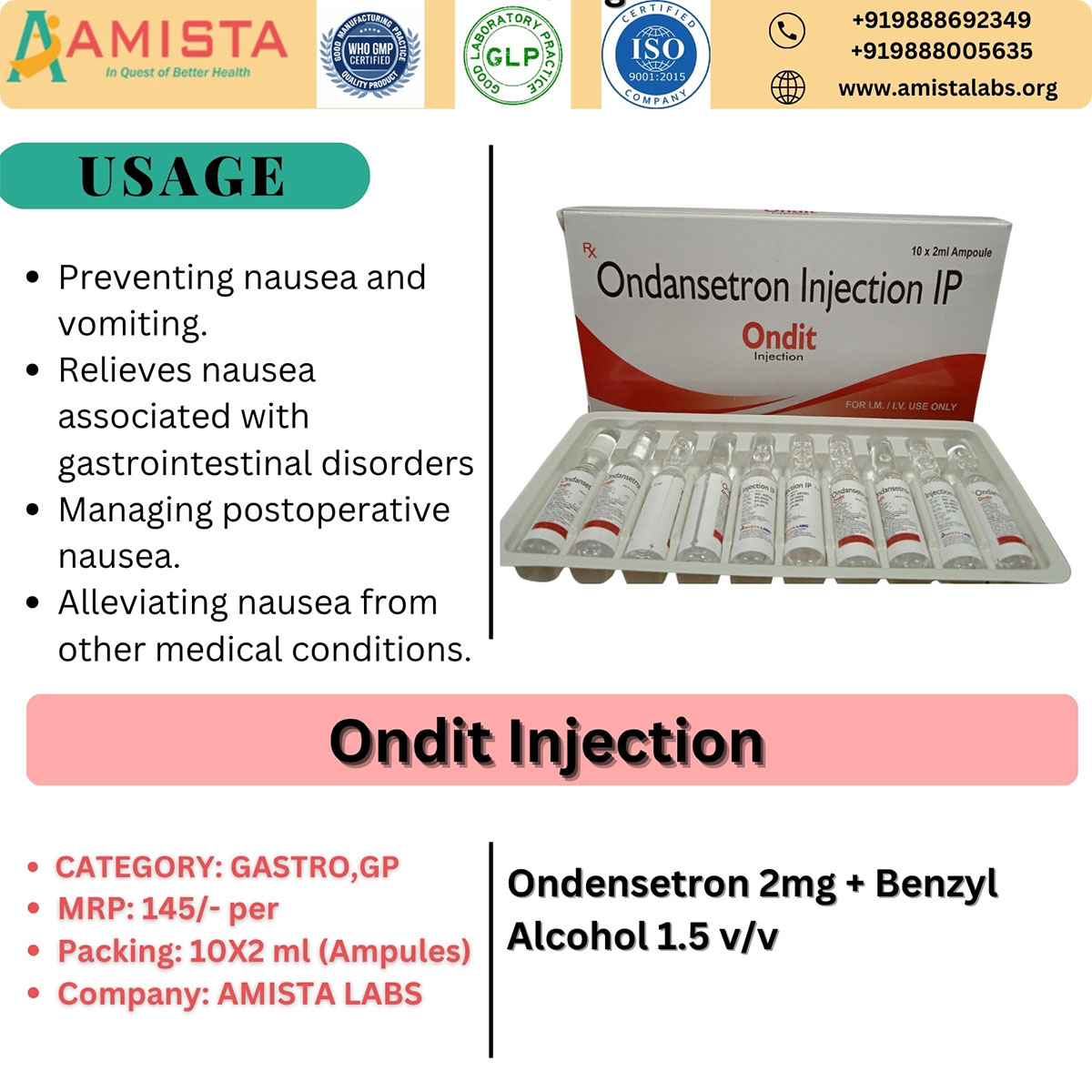
Ondit Injection is a high-quality antiemetic formulation manufactured by Amista Labs, designed to effectively prevent and manage nausea and vomiting associated with various medical conditions. Formulated with Ondansetron Injection IP, Ondit Injection is widely used in hospitals, nursing homes, and clinical settings for its rapid onset of action and reliable therapeutic results.
Amista Labs follows stringent quality standards and complies with WHO-GMP, GLP, and ISO certifications, ensuring that Ondit Injection meets international pharmaceutical safety and efficacy benchmarks.
Detailed Composition
Each ml of Ondit Injection contains:
The chemical profile of Ondit is formulated for rapid absorption and stability:
-
Ondansetron (2mg per ml): This is the primary active pharmaceutical ingredient (API). In a standard $2\text{ ml}$ ampoule, the patient receives $4\text{ mg}$ of Ondansetron.
-
Benzyl Alcohol (1.5% v/v): This serves as a preservative and a bacteriostatic agent. It ensures the solution remains sterile and stable during its shelf life.
Mechanism of Action
To understand how Ondit works, one must look at the body’s “vomiting center” in the brain and the gut. Nausea is often triggered by the release of serotonin (5-HT).
When the body undergoes stress (like surgery or toxic chemicals from chemo), serotonin is released in the small intestine. This serotonin binds to 5-HT3 receptors, sending a signal via the vagus nerve to the brain to initiate vomiting. Ondansetron blocks these receptors. By “parking” itself on the receptor sites, it prevents the serotonin signal from getting through, effectively silencing the urge to vomit before it starts.
Primary Therapeutic Uses
According to the clinical profile provided by Amista Labs, Ondit is utilized for:
-
Chemotherapy-Induced Nausea and Vomiting (CINV): It is a gold standard for patients receiving emetogenic cancer treatments.
-
Postoperative Nausea and Vomiting (PONV): Many patients react poorly to anesthesia. Ondit is often administered right before or after surgery to ensure a smooth recovery.
-
Radiation-Induced Nausea: For patients undergoing whole-body or abdominal radiotherapy.
-
Gastrointestinal Disorders: Used in acute cases of gastroenteritis where oral intake is impossible due to constant vomiting.
Administration and Dosage
Ondit is labeled for I.M. (Intramuscular) or I.V. (Intravenous) use only.
-
I.V. Route: This is the preferred method for rapid onset, often used in hospital settings.
-
I.M. Route: Used when intravenous access is difficult or for sustained release in the muscle tissue.
Note: Dosage must be strictly regulated by a healthcare professional based on the patient’s weight, age, and the severity of the condition.
Safety and Precautions
While highly effective, Ondit should be used with caution in certain populations:
-
Liver Health: Since Ondansetron is processed by the liver, patients with hepatic impairment may require lower doses.
-
Cardiac Profile: Ondansetron can occasionally affect heart rhythm (QT prolongation). It should be used carefully in patients with existing heart conditions.
-
Benzyl Alcohol Sensitivity: Because it contains Benzyl Alcohol, it is generally avoided in neonates and infants, as their systems cannot process this preservative effectively.
Product Logistics
-
Manufacturer: Amista Labs
-
Packaging: 10 x 2 ml Ampoules (Tray pack)
-
Category: Gastrointestinal / General Practitioner (GP)
-
MRP: ₹ 125.16/- (per pack of 10)




 Users Today : 14
 Users Yesterday : 61
 Users This Month : 969
 Users This Year : 2147